Introduction: Why This Question Matters to You
For overseas wearable brands, successful hardware is only half the product experience. Incomplete English, Spanish or Arabic app translations can make pairing, health reports and troubleshooting difficult. Buyers may face more support requests, negative reviews and avoidable returns. This guide shows how to evaluate multilingual software before committing to OEM/ODM orders.
Section 1: Key Concepts Every Buyer Should Understand
Localization Is More Than Language Count
An IP68 elegant luxury smart watch may offer an attractive interface, yet inaccurate wording can confuse users about notifications and activity insights. Localization requires consistent terminology, readable instructions and complete menus—not simply a list of supported languages.
Screenless Devices Depend on the App
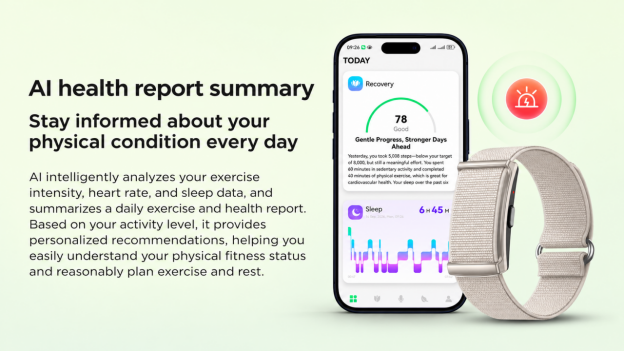
For an IP68 Waterproof 24/7 Health Monitoring Screenless Fitness Tracker, users rely on the phone to understand heart rate, HRV, sleep and recovery trends. Unclear descriptions can undermine confidence in useful data. Wellness reporting should also avoid unsupported medical claims.
AI Glasses Add Voice and Permissions Complexity
With POV shooting AI smart glasses, language quality affects Bluetooth setup, microphone permissions, voice commands and media transfer. Test instructions with local accents and actual phone settings, not just translated screenshots.
Section 2: How to Compare Suppliers — Criteria, Risk Points & Checklist
Use this checklist during sample evaluation and app demonstrations:
Checkpoint | What to verify | Red flag |
Language coverage | Core screens tested in target languages | Language list without live demo |
Health reports | Natural sleep, HRV and recovery explanations | Literal or misleading translations |
Device setup | Consistent Bluetooth and permission instructions | Untranslated system prompts |
Updates & support | Versioned glossary and correction process | No plan to fix language defects |
Trust rule: Request a live app walkthrough and verify the exact software version used for samples.
Section 3: From Sampling to Bulk Order — How It Usually Works
1. Sampling
Test an IP68 elegant luxury smart watch and an IP68 Waterproof 24/7 Health Monitoring Screenless Fitness Tracker in priority market languages. Include pairing, alerts and wellness reports.
2. Localization Review & OEM/ODM
Have native speakers review menus, user manuals and packaging. For POV shooting AI smart glasses, include voice workflows and permission screens.
3. Bulk Production
Approve a fixed app build, localized documentation and an issue-resolution plan before shipment.
4. Quality Control & Delivery
Recheck translations after updates and keep a record of corrections for distributors and support teams.
Section 4: A Practical Example — Morrison B20
Morrison B20 is a wearable platform incorporating a companion app, health metrics and recording-related functions. Its functions illustrate why clear interface language matters across wellness summaries and recording workflows. Buyers should confirm available language options and app behavior on actual samples before ordering.
FAQ (Buyer’s Quick Reference)
Q: Does support for many languages guarantee good localization?
No. Check terminology, completeness and clarity in each target market.
Q: What should distributors ask suppliers for?
Request app screenshots, sample access, supported-language details and a documented update process.
Q: Is localization relevant to Shenzhen manufacturing?
Yes. Software usability is an important part of international OEM/ODM quality evaluation.
Let's Discuss Your Project
Tell Morrison your target countries, preferred app languages, estimated order quantity and key functions. We can discuss suitable wearable platforms and which localization checks to complete before a bulk order.
Website: www.szmorrison.com
Email: sales01@szmorrison.com
WhatsApp/WhatsApp: +86 147 7480 4030
Shenzhen Morrison Technology Co., Ltd — Smart Wearable, Better Health.