
Why Does Fitness Tracker Fit Affect Sleep Tracking Accuracy? A Practical Guide for Wearable Brands, Wholesalers and Distributors
Introduction: Why This Question Matters to You
If you are a wearable brand, smartwatch wholesaler, or distributor, a common question is why two people wearing similar sleep trackers can receive different results. Even high-quality optical sensors may struggle when the band slips during sleep or presses too firmly against the wrist. For an IP68 Waterproof 24/7 Health Monitoring Screenless Fitness Tracker, fit is part of the measurement experience—not merely a matter of style.
The key sourcing challenge is balancing a stable sensor-to-skin interface with overnight comfort. This guide explains PPG contact, heart-rate variability (HRV), sleep-stage estimates, evaluation criteria and an OEM/ODM sampling process. It also shows why wearing guidance matters to customer satisfaction.
Section 1: Key Concepts Every Buyer Should Understand
How Optical PPG Sensors Work During Sleep
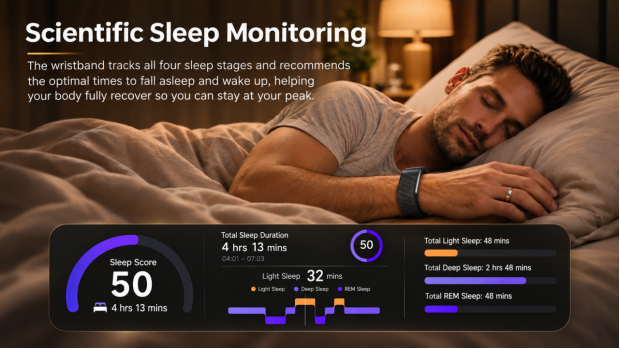
A photoplethysmography (PPG) sensor illuminates the skin and measures changes in reflected light related to blood-volume pulses. If a band is too loose, gaps and movement can introduce signal noise or missing readings. A snug fit helps keep contact consistent, but cannot eliminate all motion artifacts or individual skin-related variation.
Why Too Tight Is Not Better
Excessive pressure may create discomfort, skin marks and changes in local tissue contact, potentially affecting optical signals. Users may loosen or remove an uncomfortable tracker overnight, interrupting the data record. A comfortable, breathable, adjustable strap therefore supports both better wearing compliance and more stable measurement conditions.
Sleep Stages, HRV and Algorithm Limitations
Consumer wearables estimate sleep and recovery using combinations of motion, heart rate and sometimes HRV. Unlike clinical polysomnography, they do not directly measure brain waves. A properly fitted IP68 Waterproof 24/7 Health Monitoring Screenless Fitness Tracker may improve signal consistency, but correct positioning does not guarantee accurate deep-sleep or REM classification. Buyers should ask for validation methods and realistic accuracy statements.
Section 2: How to Compare Suppliers — Criteria, Risk Points & Checklist
Use this checklist to evaluate overnight performance and explain the right wearing method to customers:
Checkpoint | What to verify | Red flag |
Fit & Adjustment | Adjustable fit across target wrist sizes; secure contact without painful pressure | One-size strap that slides or leaves strong marks |
PPG Signal Continuity | Overnight heart-rate trace and gaps during turns or movement | Frequent missing intervals or unexplained spikes |
Sleep & HRV Methods | Transparent measurement intervals and reasonable validation evidence | “Medical-grade” claims without supporting studies |
Overnight Comfort | Breathable materials, cleanable contact area and tolerable pressure | Users remove tracker due to irritation |
App Sleep Experience | Understandable daily trends, stage estimates and clear definitions | Raw charts without explanations or limitations |
OEM/ODM Options | Strap length, language, packaging and fitting instructions | No size information or localization support |
Post-sale Guidance | Illustrated fit instructions and troubleshooting for unreliable readings | No advice beyond “tighten the strap” |
Trust rule: Request test protocols across multiple wrist sizes, positions and nights. Do not accept a single attractive sleep-score screenshot as proof of sleep-stage accuracy.
Section 3: From Sampling to Bulk Order — How It Usually Works
1. Sampling & Overnight Wear Tests
Request samples with representative strap sizes and materials. Test secure-but-comfortable fit on different wrist circumferences for several nights. Record missing heart-rate intervals, skin pressure, movement, sleep duration and user feedback; compare trends against a suitable reference where possible.
2. Customization & OEM/ODM
Agree on strap sizing, fabric or silicone choices, adjustment range, wearing diagrams, localized user instructions and app terminology. Your onboarding materials should explain that “snug” means secure contact without pain, numbness or visible restriction.
3. Bulk Production
Confirm the MOQ, sample approval criteria, order quantity, packaging and shipping terms. Include strap tolerances and device-sensor alignment in approved production specifications rather than judging quality by appearance alone.
4. Quality Control & Delivery
Include strap adjustment checks, sensor-window inspection, charging tests, Bluetooth synchronization and sampling of overnight data integrity in quality reviews. Discuss acceptable performance measures and complaint-handling procedures before shipment.
Section 4: Introducing Morrison M75 Screenless Health Band
The Morrison M75 provides a useful example for brands assessing all-day wearability alongside sleep tracking. Its published specification describes a compact screenless design with an optical heart-rate sensor and companion-app sleep analysis.
Health Tracking Architecture: The M75 combines the HX3918 optical heart-rate sensor with the SC7A20H accelerometer and supports heart-rate, HRV, SpO2, sleep, stress and activity insights. These wellness metrics are not medical diagnoses.
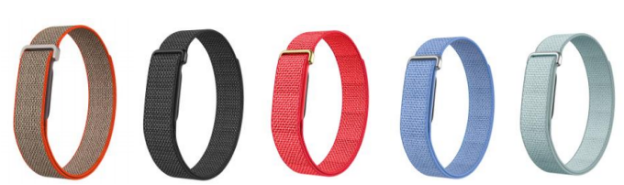
Everyday Wearability: Its compact housing and interchangeable braided strap options give buyers choices when considering overnight comfort. An IP68 Waterproof 24/7 Health Monitoring Screenless Fitness Tracker should be assessed for strap fit as carefully as for sensor specifications.
App and User Education: The Flywear companion app presents sleep and other wellness data. Brands should pair the app with clear fit instructions, explanations of estimated sleep stages and transparent limits on what the scores can tell users.
For an OEM/ODM project, the strongest sleep-tracking proposition combines sensor quality, thoughtful strap design, appropriate validation and honest user guidance—not a promise of perfect nightly measurements.
FAQ (Buyer's Quick Reference)
Q: How tight should a sleep-tracking fitness band be?
A: It should be snug enough to avoid sliding, while remaining comfortable. Follow the device-specific positioning guide, usually placing the sensor slightly above the wrist bone. Loosen it if you feel pain, numbness or persistent pressure.
Q: Can a loose strap affect HRV and sleep readings?
A: Yes. Intermittent optical contact and movement can create missing or noisy heart-rate intervals. HRV and sleep estimates may then be less consistent, depending on the algorithm.
Q: Does a good fit guarantee accurate deep-sleep and REM results?
A: No. Consumer devices estimate sleep stages from indirect signals. Fit can improve the quality of those signals, but clinical testing is required for diagnostic sleep assessment.
Q: What should an OEM buyer verify before placing a bulk order?
A: Evaluate wrist-size coverage, comfort over several nights, PPG signal continuity, app explanations, the supplier’s validation evidence and available strap or localization customization.
Let's Discuss Your Project
To evaluate a screenless health tracker for your market, kindly share:
· Target market & price: your country or region and expected retail positioning
· Order quantity: estimated sample order and bulk volume
· Strap & colors: wrist-size range, preferred strap materials and colorways
· Technical specs: sleep metrics, app localization and validation requirements
Morrison can discuss suitable evaluation samples, available product specifications and an OEM/ODM quotation based on your project requirements.
🌐 Website: www.szmorrison.com
📧 Email: sales01@szmorrison.com
📱 WhatsApp: +86 14774804030
📱WeChat:14774804030
Shenzhen Morrison Technology Co., Ltd — Smart Wearable, Better Health.

Quick Links
Contact us
Categories